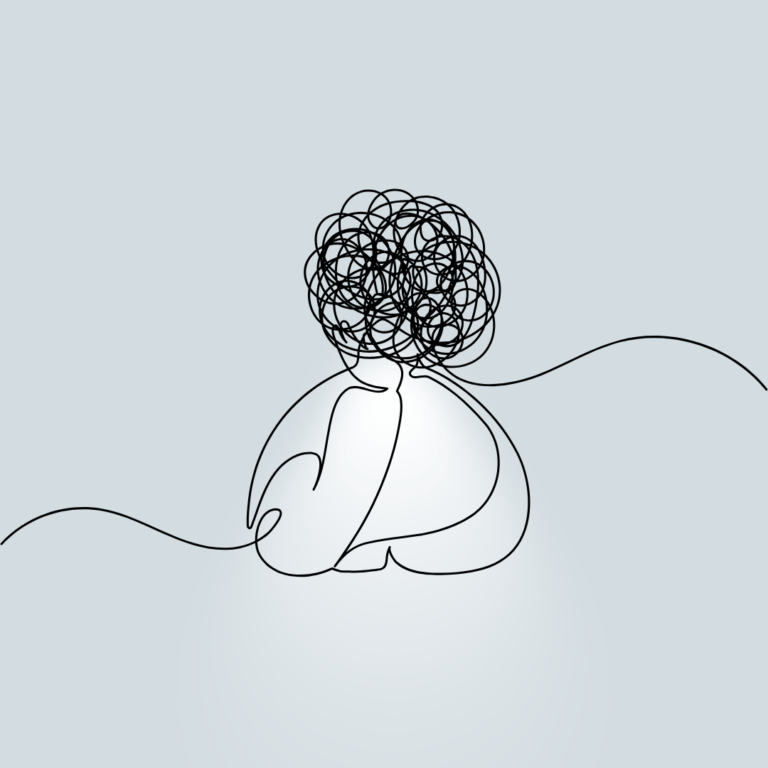
How to calm racing thoughts.
I used to get racing thoughts as a kid. It was as if my brain worked overtime. During day light hours the constant mental chatter blended with the activities of an 8 year old. Running, playing, making and doing most of the time. I would instinctively retreat if it all got too much, preferring to read alone or write a story. The night times were different. I often struggled to sleep and so, with rising stress levels, the thoughts began to churn. They became so deafening It was like a thousand shouting voices in my head. I would hide under the pillow and press the sides tightly to my ears. It was always quieter when I re-emerged, a successful early coping strategy.
As an adult I have discovered that an increase in thoughts is a direct result of the fight or flight response. The body/brain function that happens when we are in danger (real or perceived). A response that releases stress hormones into the bloodstream that effects both the body and brain. These hormones make us focussed, fast and research has shown they stimulate certain parts of the brain that are responsible for thought generation. This increase is experienced as racing thoughts often reaching its peak during a panic episode. This can make ‘thinking straight’ very difficult at stressful times. Once the body is no longer in stress response brain activity normalises and so too thought generation.
Slowing the mental chatter.
Awareness
Racing thoughts have an interesting quality with awareness. Let’s say you are waiting to give a talk to 200 people. You will be feeling understandably nervous and this could be pumping stress hormones into the system. In turn the thoughts start to churn and they are not going to be pretty. In an attempt to keep you safe, your brain will be throwing up all sorts of reasons not to step centre stage. This whole process can happen very quickly and feel extremely persuasive. Remember that 70% of your thoughts remain unchecked and during stressful times those negative chains can stretch for miles, impacting your emotions and behaviour.
If you practice awareness of thought it can serve to slow down a racing brain. This act of noticing creates space to observe. You feel less ‘swallowed up’ and able to control emotional and behavioural impact. At this point we can choose more helpful self-talk and useful tools to counter this primitive survival response.
You are not your thoughts
Many negative thoughts have a personal quality to them. It is very easy to become invested in what seems statements of fact. Interjecting with an element of curiosity can be helpful. Question your anxious thinking and reflect on more balanced probability in the present.
Beginners mind
Develop the habit of simply not knowing. Catastrophising is natural in a worry cycle so try to see the situation for the first time. There is great potential in developing a beginners mindset. Letting things unfold means using words such as ‘could’ and ‘might’ rather than the definitive ‘should’ and ‘would’.
Get them out of your head
Talk about your worries with someone you trust. Write them down. Don’t keep them inside all day or subdue them because they will come back up at quieter times.
A simple Mindful practise
Watching or noticing the breath is a key mindfulness practice. With practice you can come back to the breath at any time to centre yourself. Follow the breath in and out the body. Direct the breath to areas of tension within the body to soften muscles. Combine the breath with simple calming mantra’s, they can be transformative.